
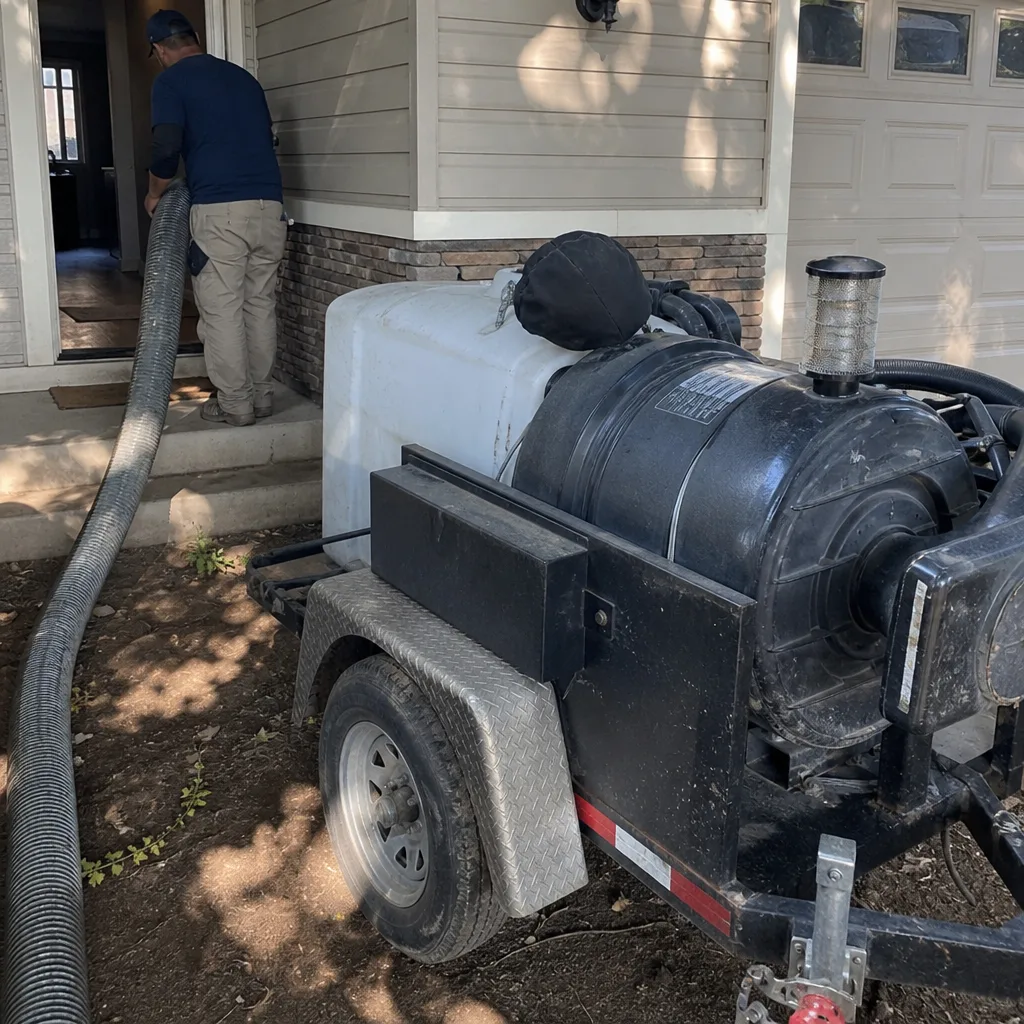
Last updated November 16, 2026
 Whole-home duct cleaning
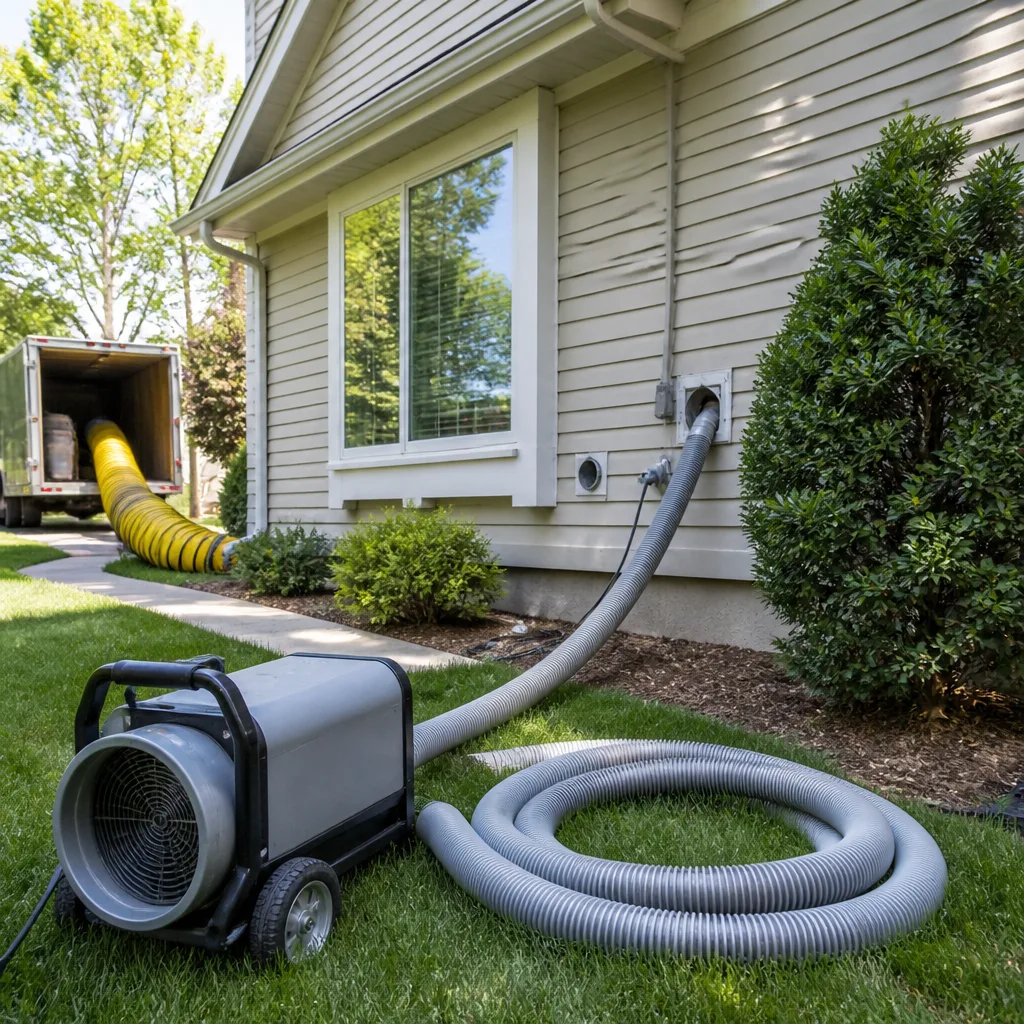
 Dryer vent cleaning
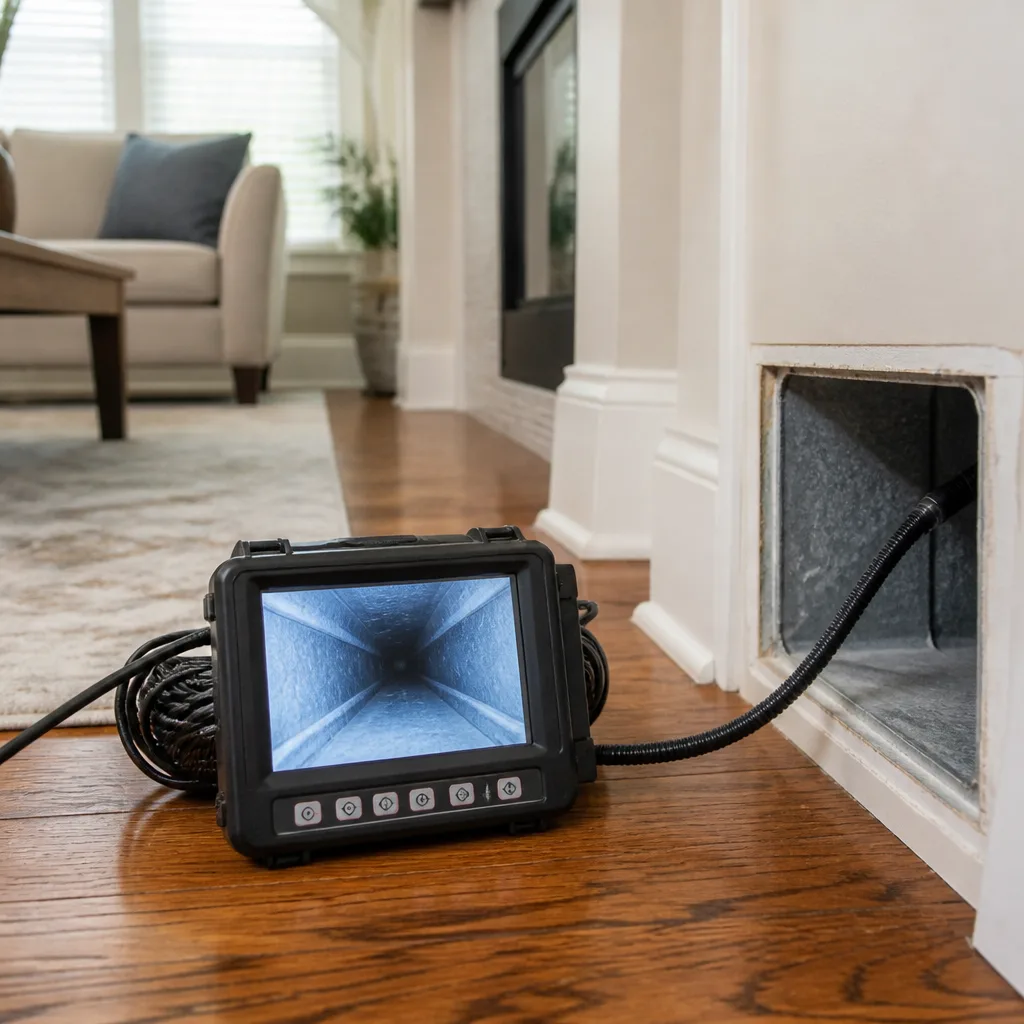 Camera inspection
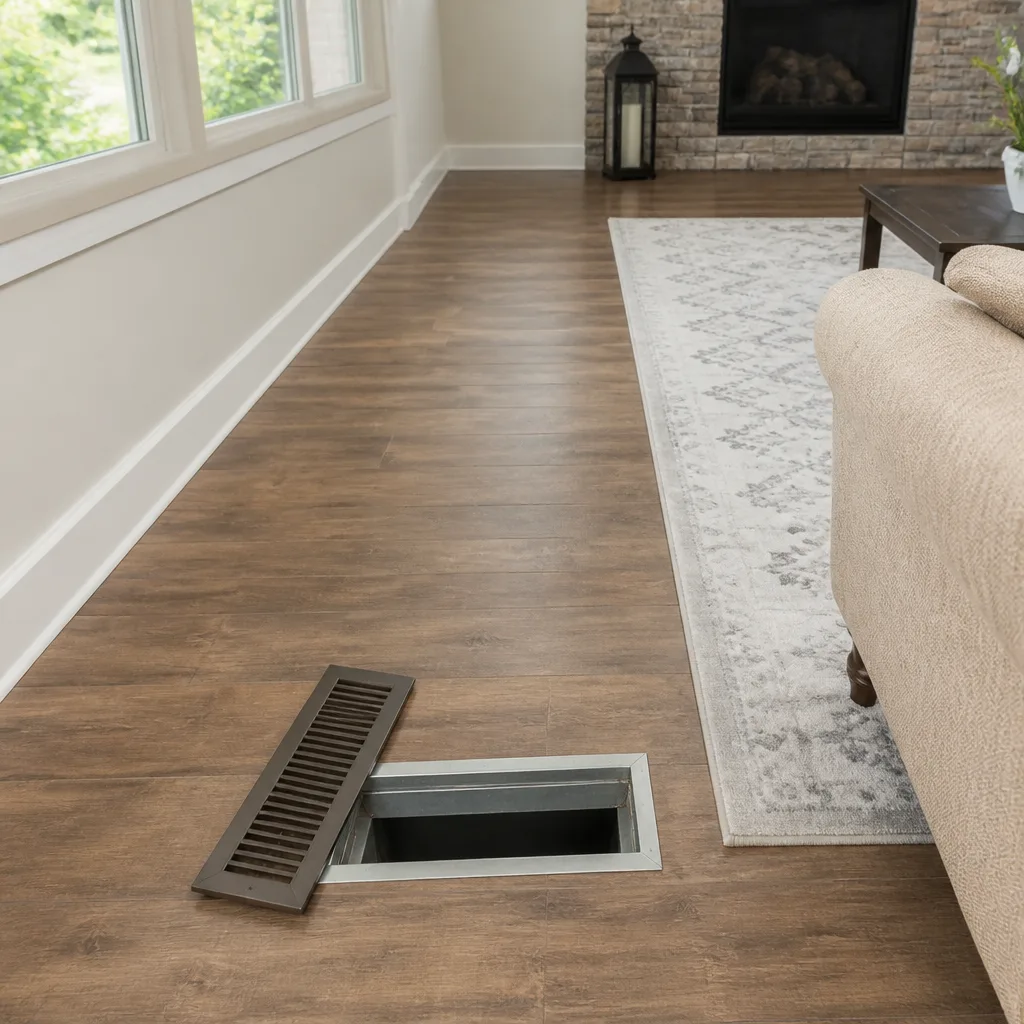 Sanitizing & deodorizing
Whole-system duct and dryer vent check with before-and-after photos - you see exactly what came out of your vents
That "$99 whole-house special" is a bait ad - the real number appears once they are in your hallway, or the "clean" is a shop-vac at the register. We photograph the inside of your ducts before and after instead.
Air Duct Cleaning Warning Signs: A Chico Homeowner’s Reference Guide
When a Chico home has rooms that never quite reach the thermostat setting, the usual assumption is that the furnace or air conditioner is undersized. Most of the time it isn’t. The equipment is running exactly as designed, but the ducts feeding those rooms are restricted, leaking, or loaded with debris that slows airflow to a crawl. In our experience, homeowners replace working equipment before anyone has looked inside the duct system. This guide covers the mechanical and air-quality signals that point to duct trouble in Chico homes, the checks you can do yourself, and the signs that mean it’s time to call a professional.
Quick Answer
The main warning signs of a dirty or damaged duct system in a Chico home are uneven room temperatures, filters that clog faster than they should, doors that swing or pull on their own, musty or metallic odors after a wildfire smoke event, discoloration at supply registers, and a dryer that takes more than one cycle to finish. Any two of these appearing together usually means debris, leakage, or a restriction somewhere in the system, and an inspection settles which one it is.
Styles & brands we work with
- Whole-home duct cleaning
- Dryer vent cleaning
- Camera inspection
- Sanitizing & deodorizing
Table of Contents
- Uneven Room Temperatures: Why Duct Restrictions Mimic HVAC Failure
- Pressure Differential Clues: Doors That Move on Their Own
- Filter Loading Rate as a Diagnostic Tool
- Wildfire Smoke Residue: The Metallic or Acrid Odor That Won’t Clear
- Visible Growth vs. Normal Dust at Registers
- Dryer Vent Warning Signs That Parallel Duct Problems
- A Room-by-Room Self-Check You Can Do This Week
- When Warning Signs Cross Into Professional Territory
Uneven Room Temperatures: Why Duct Restrictions Mimic HVAC Failure
If one bedroom runs five to eight degrees off the rest of the house, the problem is usually airflow, not capacity. A restricted branch duct, a crushed flex run behind drywall, or a partially closed damper upstream can starve a room while the equipment works harder to compensate. In Chico’s hot summer afternoons, that mismatch is most obvious on the west-facing side of the house, where heat gain already pushes those rooms to their limit. Restricting them further with poor duct delivery makes them unbearable by mid-afternoon.
Here’s how we separate a duct problem from an equipment problem, without opening a wall:
- Compare return-air pull. Hold a tissue against each return grille. If one barely pulls while others grab it firmly, the return side is unbalanced or restricted.
- Check supply velocity at each register. A hand held a few inches from the vent should feel roughly the same airflow at every supply in the house. One weak vent means a restriction on that branch.
- Look at the thermostat location. A thermostat mounted in a hallway near a return will read the return air, not the bedroom. If the hallway hits setpoint while bedrooms lag, the system is running correctly and the ducts aren’t delivering.
- Note the pattern across seasons. If the same rooms are off in both heating and cooling, it’s a duct issue. If only cooling is affected, it can be a refrigerant or equipment matter.
A surprising number of Chico homes we inspect have equipment that was replaced in the last few years for a problem no one traced back to the ducts. The new unit runs, the bill goes up anyway, and the room still doesn’t cool.
Pressure Differential Clues: Doors That Move on Their Own
A door that drifts open or pulls shut on its own is not a ghost story. It’s a pressure signal. When a duct system leaks on the supply side or is restricted on the return side, the house develops a pressure imbalance, and interior doors become the easiest path for air to equalize. A bedroom door that swings inward when the furnace kicks on is telling you the room is under negative pressure, meaning the return path for that room isn’t working.
Common pressure-related symptoms we look for in Chico homes:
- Interior doors that latch or stick differently when the air handler is running.
- A whistling or rushing sound at the gap under a closed door.
- Dust collecting along one edge of a door frame, showing air is passing there.
- A bathroom exhaust fan that feels weak when the HVAC is running, or one that pulls harder than it should.
- Fireplace or wood stove smoking back into the room when the furnace cycles on.
Pressure problems are worth taking seriously. Beyond comfort, an unbalanced system pulls air from wherever it can, including unconditioned attics, crawl spaces, and garages. That air carries dust, insulation fibers, and, in Chico, plenty of fine particulate from outside. Fixing it usually means sealing returns, correcting the balance, and clearing whatever restriction is causing the imbalance in the first place.
Filter Loading Rate as a Diagnostic Tool
A filter that clogs in a month when it used to last three is the single most reliable early signal of a dirty duct system. The filter is doing its job, catching what the ducts are recirculating. When a filter loads fast, it means the return side of the system is pulling debris-laden air from somewhere it shouldn’t, or the ducts themselves are shedding accumulated dust into the airstream. Changing the filter more often treats the symptom. Cleaning the system addresses the source.
How to use filter loading as a diagnostic, in practical steps:
- Note the date each time you change the filter, and write it on the filter frame with a marker.
- Photograph the old filter before discarding it. The color and distribution of buildup tells a technician a lot: uniform grey is normal, dark edges suggest leakage, and a heavy coat on one side only points to a specific return problem.
- Compare across seasons. Chico’s dry summers and fall wildfire smoke season push more particulate into systems than spring months do.
- Watch for filter collapse. A filter that gets sucked concave or tears is a sign of excess static pressure from a restricted duct, not a filter problem.
If you’re changing filters every four to six weeks and still seeing heavy buildup, that’s the point to have the system looked at, not the point to buy filters in bulk.
Wildfire Smoke Residue: The Metallic or Acrid Odor That Won’t Clear
In Chico, summer and fall smoke events are a fact of life, and the duct system holds onto what comes through it. Ash is fine, abrasive, and slightly alkaline. When it settles in the ducts, it doesn’t just sit there quietly until the next cleaning. Warm air passing over ash deposits can produce a persistent metallic or acrid smell when the system first runs each day. That smell is a warning sign specific to smoke exposure, and it’s one most generic duct-cleaning guides don’t mention.
The pattern usually looks like this: the smoke event passes, the outdoor air clears, and the house still smells faintly of smoke on the first cycle of the day. Opening the windows doesn’t help. Running the fan for an hour makes it slightly worse. That’s the signature of accumulation inside the system, not seasonal odor carried in from outside.
Other smoke-specific signs include:
- A fine grey film returning to windowsills and horizontal surfaces weeks after cleaning them.
- Smoke smell strongest from one or two registers rather than the whole house.
- Filter loading that jumps sharply after a smoke event.
- A metallic taste or smell noticed when the heat first comes on in fall.
Ash is a fine particulate that requires professional capture. Loosening it with a consumer vacuum or a shop vac just pushes fine particles back into the room. Our approach uses Abatement Technologies air-filtration equipment alongside a Nikro system so dislodged ash is captured and removed, not recirculated. That matters more in Chico than in most markets, because the smoke season isn’t hypothetical here. Ask about capture and containment when you get quotes. It’s the difference between cleaning a system and just disturbing it.
Visible Growth vs. Normal Dust at Registers
Not every dark mark around a register is mold. Most of them are not. A general rule: uniform grey or black dust collecting around the perimeter of a supply grille is normal particulate buildup, especially along the edges where airflow slows. Irregular spots, a fuzzy or speckled texture, or discoloration spreading outward from the vent are different, and worth a closer look. If you’re seeing green, pink, or black textured growth, or if the smell is damp and musty rather than dusty, that’s a different category of problem.
Here’s how to tell them apart without guessing:
- Dust wipes away easily and returns gradually over weeks.
- Staining from condensation or a duct leak leaves a tide-mark edge, often on the ceiling around the vent.
- Biological growth tends to be textural, spreads in irregular patches, and has a distinctly damp, earthy smell.
- Ash from smoke deposits is fine, grey, and returns to horizontal surfaces repeatedly rather than clustering at the vent.
If you suspect growth, don’t run the system and don’t wipe it with household cleaners. Call for an inspection. Moisture problems inside ducts usually trace back to a specific cause, often a leaking connection near an evaporator coil or an unconditioned attic run pulling humid air. The duct system in most Chico homes is where those problems show up first. Cleaning and repair are within our scope; identifying the moisture source and any remediation beyond the duct system is a job for the right specialist, and we’ll tell you when that point has been reached.
Dryer Vent Warning Signs That Parallel Duct Problems
A dryer that takes two cycles to finish a load is telling you something. So is a laundry room that gets noticeably hotter than the rest of the house. Both point to a restricted dryer vent, and that’s a fire hazard, not just a comfort annoyance. Clogged dryer vents cause thousands of residential fires a year nationally, and a Chico home’s exterior vent cap is where you can check for the warning signs in thirty seconds.
The signs we look for:
- Lint around the exterior vent cap, or lint visible where the flapper hinges.
- A flapper that doesn’t open fully when the dryer is running.
- The laundry room fogging up or feeling humid after a load.
- Heavy heat radiating from the dryer front during operation.
- Clothes that emerge hot but still damp in the middle of the bundle.
- A faint burning smell, which means the vent is overdue and deserves same-day attention.
Dryer vents and HVAC ducts share the same warning logic: both rely on unobstructed airflow, both accumulate material over time, and both are usually out of sight and easy to forget. The difference is consequence. A restricted duct costs comfort and money. A restricted dryer vent can cost lives. We handle dryer vent cleaning as a separate service from duct cleaning because the equipment and approach differ, and because we think homeowners deserve to know exactly what was cleared and what state the vent is in when the job finishes.
A Room-by-Room Self-Check You Can Do This Week
You don’t need special tools to get a rough sense of whether your ducts need attention. An hour of walking through the house with a notebook and a flashlight will tell you a lot, and it will give a technician a much better starting point when you call. Here’s the sequence we recommend.
- Start at the thermostat. Write down the setpoint and the current reading. Note the outside temperature. This gives a baseline for the temperature comparisons below.
- Walk each room with a thermometer or a phone app. Record the temperature two feet from each supply register and in the center of the room. Differences of more than three or four degrees between rooms matter.
- Check airflow at every register. Hold a tissue a few inches from each vent and note whether it flutters strongly, weakly, or not at all. Weak vents map out the restricted branches.
- Open and close each interior door while the air handler is running. Note any doors that pull, resist, or drift.
- Inspect every supply and return with a flashlight. Look for dust shadows, dark staining, or growth. Photograph anything questionable.
- Change the filter and date it. Note how long it’s been since the previous change.
- Go outside and check the dryer vent cap while running a load. Note flapper movement, lint, and whether the laundry room heats up.
- Walk the exterior perimeter and check for HVAC penetrations that look caulked, cracked, or missing a screen. Outdoor air can enter the system through openings in the shell.
Write down what you find. A list of specific symptoms with room names is worth more than a vague “the house isn’t comfortable” when you get an estimate.
When Warning Signs Cross Into Professional Territory
Some signals are worth watching. Others mean stop and call. The stop signs are: a persistent odor after a smoke event that doesn’t clear in a week, a dryer that isn’t finishing a normal load, visible growth at a register, debris blowing out of a supply when the fan starts, or a system that has never been cleaned and is over a decade old. Any of those, on their own, justifies an inspection. Two or more together usually means the system needs cleaning and probably a repair or two while it’s open.
When you’re ready, call a professional who can both clean and repair. Most duct cleaning quotes price the cleaning and then discover repairs separately. We handle air duct cleaning, dryer vent work, and duct repair with the same team, so what’s found during cleaning gets addressed on the same visit rather than turned into a second appointment. That matters in a market where ducts in older Chico neighborhoods often show up with disconnected joints and crushed flex runs that a cleaning-only contractor has to walk away from.
Common Mistakes to Avoid
- Replacing HVAC equipment before checking the ducts. A new furnace or air conditioner hooked to a restricted duct system delivers the same uneven rooms at a higher monthly bill. Have the ducts inspected first. It’s the cheaper diagnostic.
- Trusting a $99 coupon as a whole-system price. In Chico, as everywhere, a low coupon price is a per-vent or per-opening teaser that becomes a larger invoice once the technician is on site. Ask for one flat price for the whole system, in writing, before work starts.
- Buying a consumer vacuum-based “duct cleaning” service. Shop vacuums and consumer-grade machines loosen debris without capturing it. That fine ash and dust ends up back in the living space. Purpose-built equipment is the difference.
- Ignoring the dryer vent because the ducts “aren’t that bad.” Duct and dryer-vent maintenance are separate. A clean HVAC system can sit right next to a lint-choked dryer vent, and the dryer vent is the one that causes fires.
- Waiting for a musty smell before acting. By the time a musty odor shows up, there’s usually a moisture source that’s been feeding growth for months. Warning signs like uneven airflow and filter loading come earlier.
- Skipping the before-and-after documentation. If a contractor finishes and can’t show you photographs of what was removed and what the ducts look like now, you have no way to know the work happened. Ask for images before you pay.
- Assuming the system is fine because the air conditioning cools. A duct problem masquerades as an HVAC problem in summer and a furnace problem in winter, and in Chico, where both seasons demand a lot from the system, the mask is easy to keep up.
See the difference
 Before
 After
 Before
 After
 Before
 After
When to Call a Professional
Call a professional when your self-check turns up two or more warning signs on this list, when the dryer isn’t finishing a load, when smoke odor or ash lingers in the system, when you see growth at a register, or when the system hasn’t been cleaned and you don’t know its history. Call immediately if you see lint at the exterior dryer vent cap or smell burning. Duct Cleaning Chico offers free estimates in Chico. Call (866) 942-5531. We answer 24/7. Fast dispatch from 7am to 7pm, Sunday through Friday. Our technicians have up to 12 years of experience, and the estimate is one flat price per system, agreed before work starts.
Frequently Asked Questions
You know your ducts need cleaning when you have two or more of the warning signs on this list: uneven room temperatures, a filter that clogs unusually fast, doors that pull or drift, a persistent odor after smoke, visible buildup at registers, or a dryer that takes more than one cycle. One symptom on its own could be weather, equipment, or a filter type. Two or more together, especially with a filter loading rate that’s changed, points to the duct system. If a contractor can’t explain what they found and show you evidence, ask for it before agreeing to work.
Whole-system duct cleaning in Chico typically runs in the mid-three-figure range per system, and the written estimate sets the final price. The important number isn’t the one on the flyer. It’s the price for the whole system, not per vent, with the specific work spelled out before anything is touched. A low coupon number that turns into a per-opening charge is the bait-and-switch the industry is known for. Call (866) 942-5531 for an exact quote. Estimates are free.
Cheaper quotes usually reflect one of three things: per-vent pricing that grows as the technician works through the house, consumer-grade equipment that loosens debris without capturing it, or a cleaning that skips the return side and the trunk lines. Contractor-grade equipment costs more to buy and run, but it’s also the only way to actually remove fine particulate and smoke ash, which shop vacuums push back into the room. Ask what equipment will be used. If the answer is vague, the price is hiding the difference.
You know the work was done when you see before-and-after photographs of your own ducts, and when the technician can show you what came out of the system. Before-and-after photos of the actual duct interior, taken at specific locations and matched, are the most reliable proof. Our approach uses Guardsman-line products in the finish stage, and we photograph the system at the start, mid-job, and finish. Pay only after you’ve seen the images, not before.
Sometimes yes, sometimes no. A light smoke event with windows closed and filtration running usually leaves minimal trace. A sustained event, or one where the house was opened up, often deposits enough fine ash in the ducts that the metallic or acrid smell lingers on first heat each morning. The deciding factor is whether the symptom persists weeks after the outdoor air clears. If it does, the system needs cleaning. In Chico, this is a real annual consideration, not a hypothetical one.
Duct cleaning is not a fixed calendar item. Factors that matter more than time are: whether the previous owner ever had it done, whether anyone in the home has respiratory sensitivity, whether the home has had a wildfire smoke exposure event, and whether visible dust is blowing from the registers. For most Chico homes, a proper cleaning every three to five years is a reasonable working rhythm, with dryer vent cleaning watching the exterior cap and checking at least annually. If you can’t remember the last cleaning, that alone is a reason to get an inspection.
The Bottom Line
The warning signs of dirty or damaged ducts in a Chico home show up as mechanical and air-quality clues before they show up as obvious problems. Uneven rooms, fast-loading filters, doors that swing on their own, metallic smells after smoke events, discoloration at registers, and a dryer that won’t finish a load are all early indicators. Taken together, they point clearly to the duct system, and the system is usually the least expensive part of the puzzle to address. Ignore them, and the money goes to new equipment that inherits the same restriction. Address them, and the same system runs better, cleaner, and safer.
If any of this sounds familiar in your own home, call us for a free estimate. Call (866) 942-5531. We answer 24/7. Fast dispatch from 7am to 7pm, Sunday through Friday. Our team handles duct cleaning, dryer vent cleaning, and duct repair with the same professional equipment and the same one-flat-price approach. We clean, we repair, we improve, and we can show you the photos to prove it.
Written by the team at Duct Cleaning Chico.