
Last updated November 16, 2026
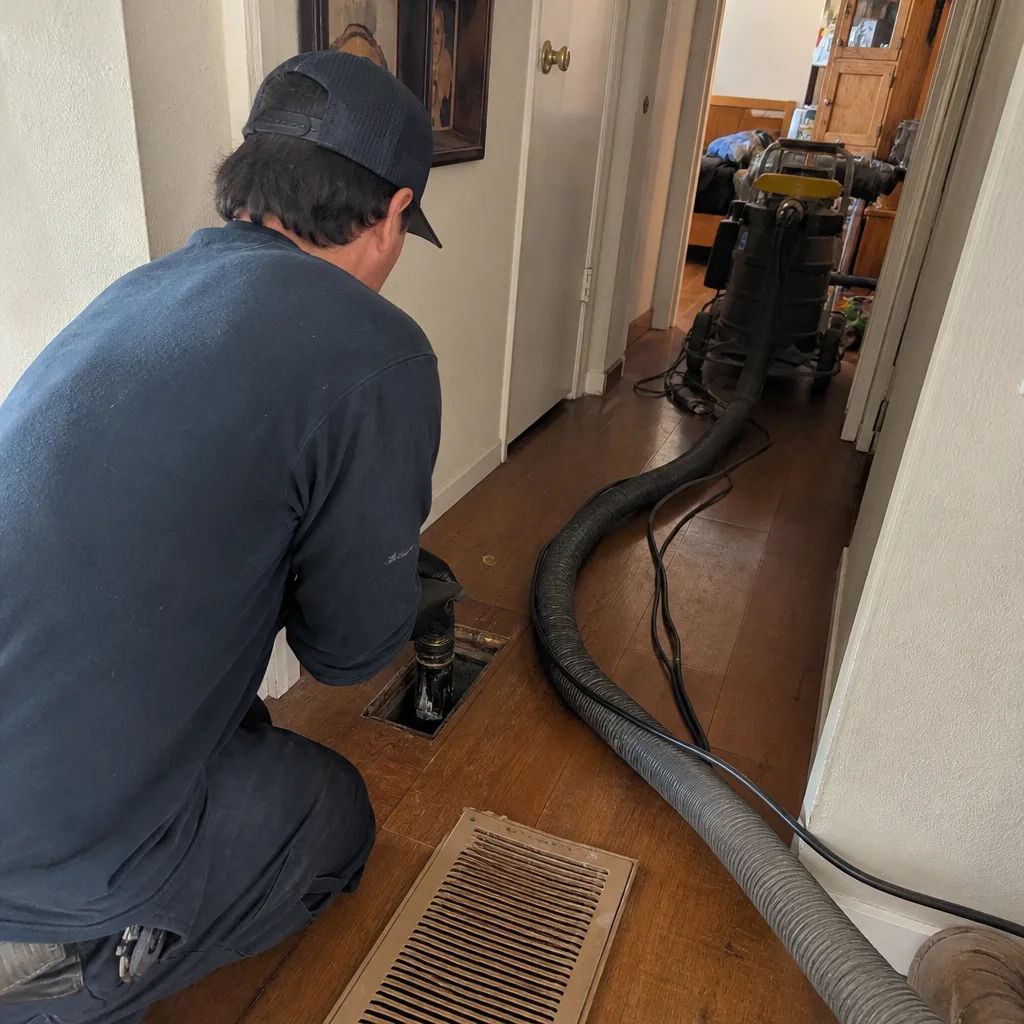
 Whole-home duct cleaning
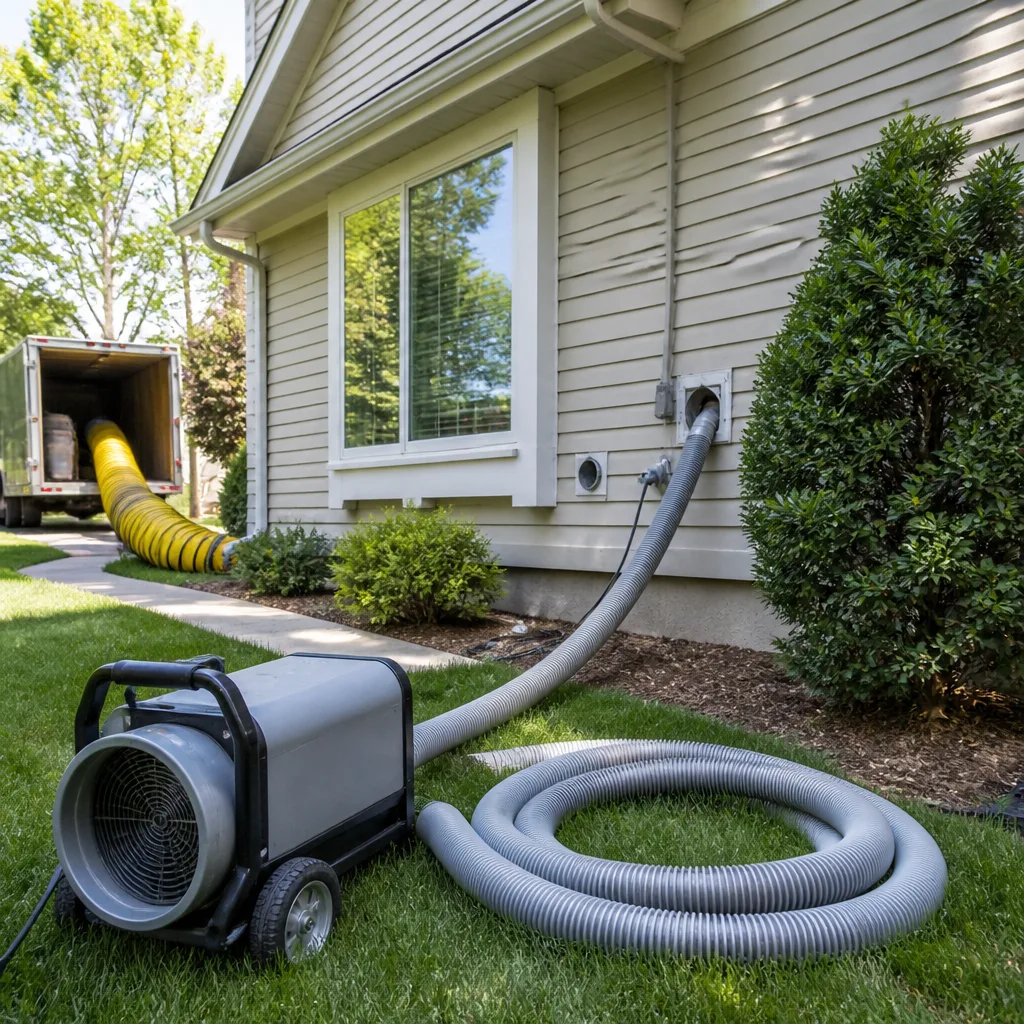
 Dryer vent cleaning
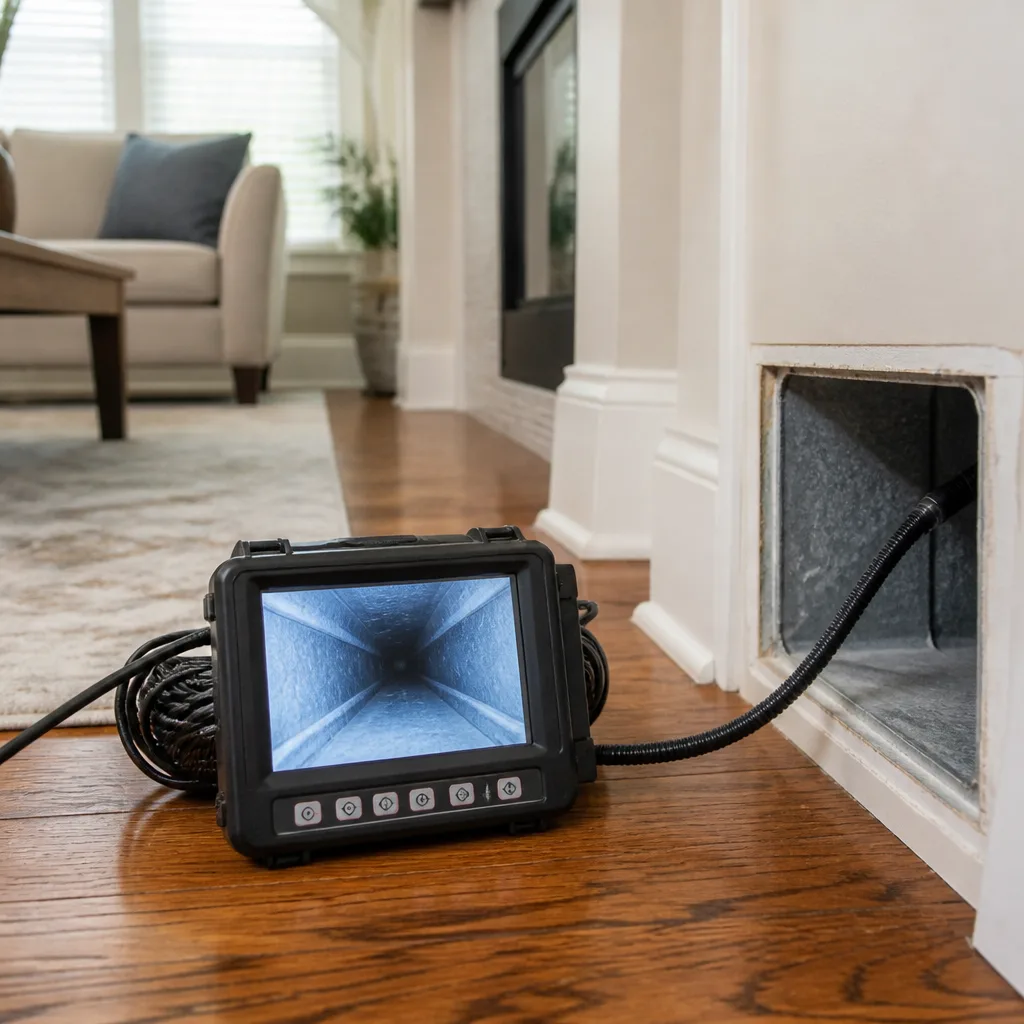 Camera inspection
 Sanitizing & deodorizing
Whole-system duct and dryer vent check with before-and-after photos - you see exactly what came out of your vents
That "$99 whole-house special" is a bait ad - the real number appears once they are in your hallway, or the "clean" is a shop-vac at the register. We photograph the inside of your ducts before and after instead.
DIY vs Professional Air Duct Cleaning: The Chico Homeowner’s Decision Guide
A rented duct-cleaning brush kit moves debris. It doesn’t capture it. That distinction is the whole ballgame, and it’s the part almost every DIY tutorial skips. Without a HEPA-filtered negative-pressure collection system pulling at the other end of the run, you’re redistributing contamination through the house rather than pulling it out. We wrote this guide because Chico homeowners deserve a straight answer about where the DIY line actually falls: which tasks you can legitimately handle yourself, which ones consumer equipment physically cannot do, and how to judge when the professional price gap is buying a real outcome versus a sales pitch.
Quick Answer
Light register cleaning, dryer vent lint removal near the dryer, and filter upgrades are realistic DIY jobs. True source-removal duct cleaning is not, because consumer vacuums and shop-vacs can’t generate the sustained negative pressure and HEPA filtration needed to capture dislodged debris. Professional cleaning is worth the cost when you have post-renovation dust, rodent or pest debris, confirmed moisture problems, or fuel-burning appliance concerns in the return system.
Styles & brands we work with
- Whole-home duct cleaning
- Dryer vent cleaning
- Camera inspection
- Sanitizing & deodorizing
Table of Contents
- The Physics: Why Consumer Equipment Can’t Do Source Removal
- What a Competent DIYer Can Legitimately Handle
- Where DIY Specifically Falls Short
- The Cost-Benefit Math for Chico Homes
- What to Do Between Professional Cleanings
- How to Inspect Your Own Ducts Before You Decide
- Chico Housing Stock and What It Means for Duct Debris
- Common Mistakes to Avoid
- When to Call a Professional
The Physics: Why Consumer Equipment Can’t Do Source Removal
“Source removal” is the industry term for cleaning that physically extracts contaminants from inside the duct system and takes them out of the building. The alternative, and what most DIY attempts amount to, is agitation: a brush or air whip loosens material, and whatever vacuum happens to be attached hopefully pulls some of it away. When the capture equipment isn’t sized to the job, the rest of that loosened material settles back into the ductwork or blows into the rooms.
Three physical requirements make a real source-removal job work:
- Negative pressure throughout the system. The collection unit has to pull the entire duct run into negative pressure so loosened debris moves toward the vacuum, not into living space. A shop-vac pulling 150-200 CFM at the hose end can’t do this across a typical residential trunk-and-branch layout. Professional truck-mounted and portable units are built specifically for multi-room duct runs.
- HEPA-grade filtration at the collection point. Fine dust, ash, and biological material will pass straight through a standard shop-vac filter and exhaust back into the room. Professional equipment routes the airstream through HEPA filtration before discharge, or exhausts it outside entirely.
- Containment at the source. Professional work seals every register except the one being cleaned, so the system is only open at the point of extraction. Otherwise the pressure you generate just pulls house air in through the other registers and dumps loosened debris behind the brush.
This is why we run Rotobrush and Nikro equipment on residential jobs and bring Abatement Technologies air-filtration units onto the site. It’s not about the brand names; it’s that the equipment is engineered to meet those three requirements, and a consumer-grade machine is not. We’ve seen the difference on jobs where a homeowner had already tried a rented kit: the ducts look cleaner at the register, but the trunk lines still hold the material that got stirred up and settled back down.
What a Competent DIYer Can Legitimately Handle
None of that means there’s nothing for you to do. Several maintenance tasks are genuinely within reach with basic tools, and handling them yourself saves real money over time without a false sense of a “cleaned” system.
Register and grille cleaning
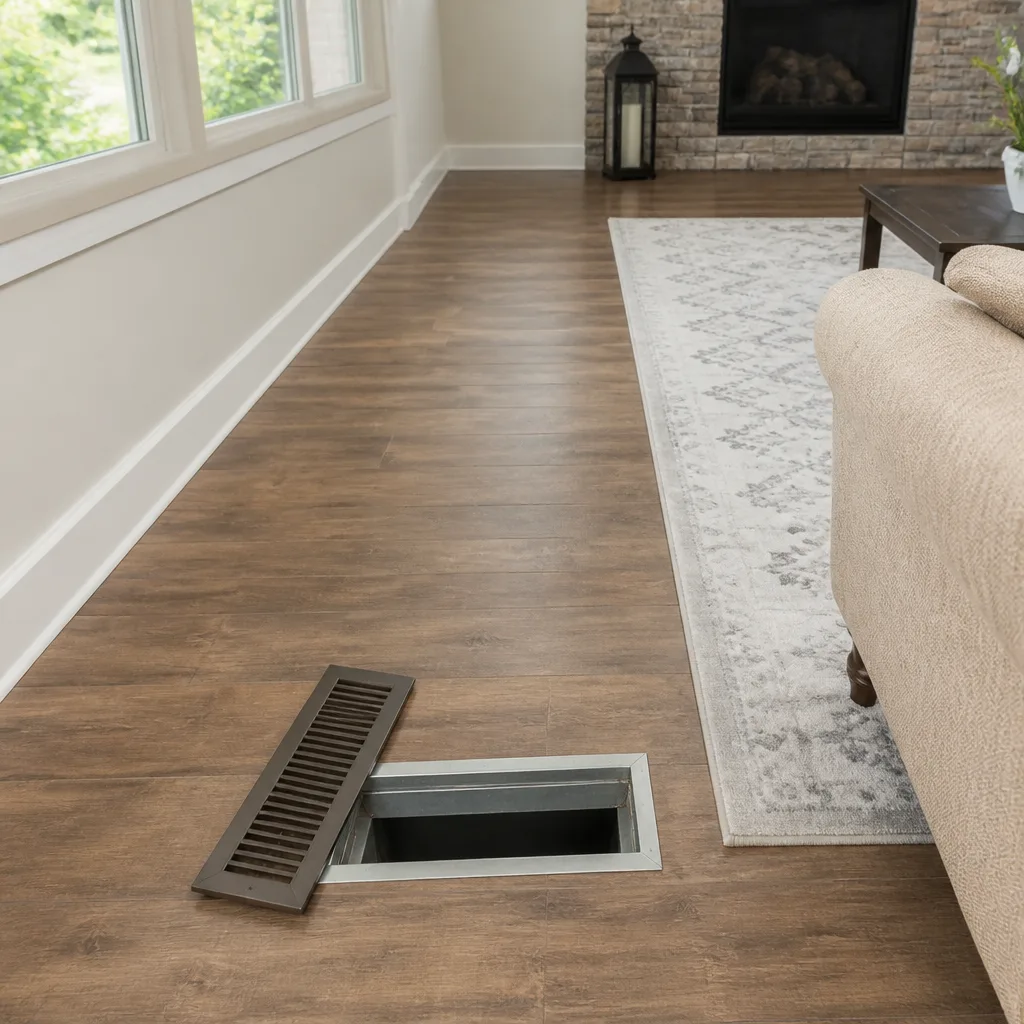
Pop the supply and return grilles off (usually two screws or a friction fit). Wash them in a utility sink or hose them off outside, then dry them fully before reinstalling. Dust that collects on the grille is easy to see and easy to remove, and it’s a big part of what makes a room feel stuffy. You’re treating what’s visible, not what’s inside the duct, and that’s fine as long as you understand the difference.
Dryer vent lint removal at the accessible end
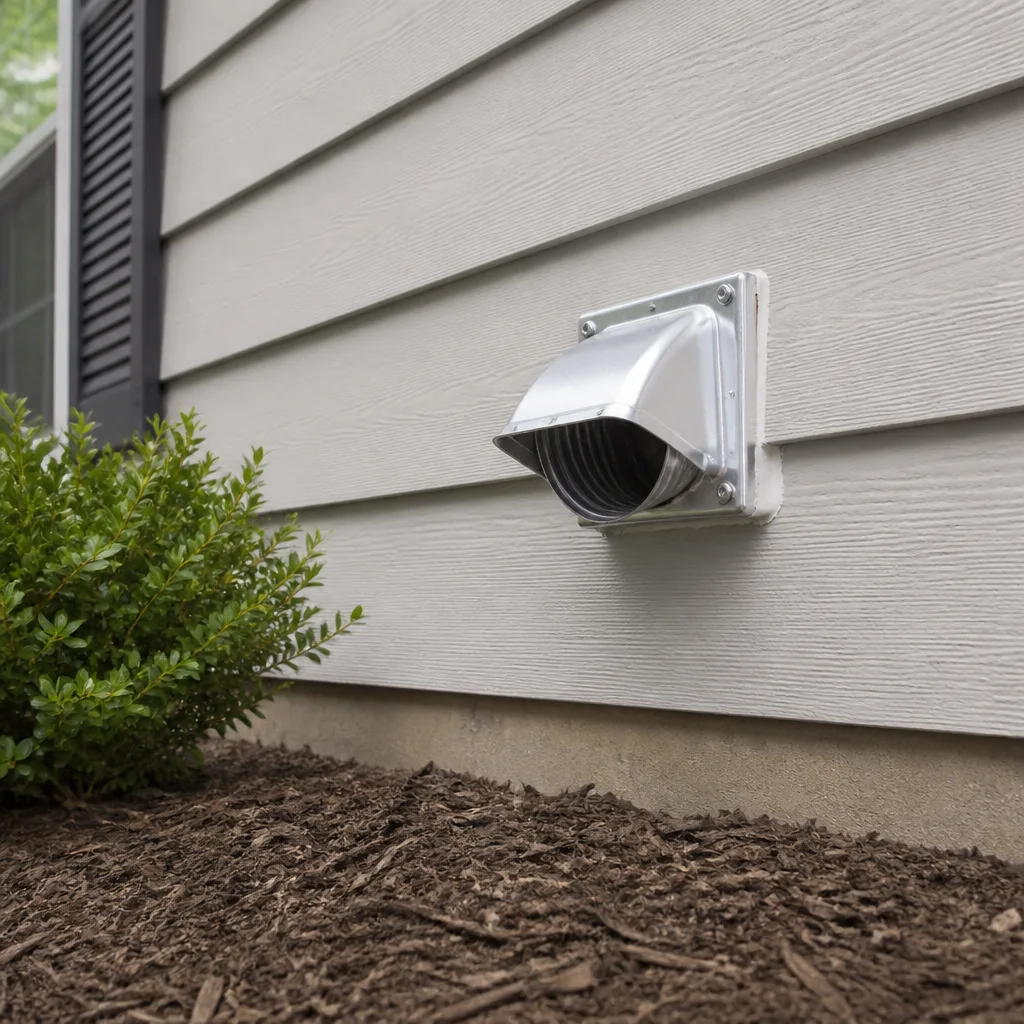
Unhook the flexible transition duct behind the dryer, vacuum out what’s reachable, and clear lint from the exterior termination hood. This is the single most valuable DIY task in the house, because dryer vent lint is a leading cause of residential fires. What you can’t easily do is clear the full run inside the wall cavity, and that’s the section that matters most. If your dryer takes noticeably longer than it used to, or the exterior flap doesn’t move freely with the dryer running, the run needs professional attention. Our dryer vent cleaning service exists precisely because the most dangerous lint accumulation sits where a shop vac can’t reach.
Filter upgrades
Swapping a basic fiberglass filter for a pleated MERV-rated filter is a legitimate DIY air-quality step, and it usually costs less than a service call. Match the rating to your system’s spec rather than going as high as possible, because an oversized filter can restrict airflow. If your equipment was designed for a specific filter, that’s the one to use.
Keeping intake areas clear
Make sure return-air grilles aren’t blocked by furniture, rugs, or storage boxes. Sounds trivial. In practice, blocked returns create pressure imbalances that pull extra dust into the system. Free.
Where DIY Specifically Falls Short
Some situations are not a matter of skill. They’re a matter of equipment capability and containment standard that a homeowner simply cannot replicate, and there are also health and safety reasons to leave those jobs to trained technicians.
After a fire or smoke event
Ash and combustion residue are extremely fine and travel deep into the system. Agitating them without HEPA capture at the collection point puts them back into the air in every room. Professional work here means containment sealing, true HEPA filtration, and verification that the system is clean before the house is reoccupied.
Confirmed or suspected mold growth
Mold inside a duct system is a moisture problem first. If you see or smell it, the right first call is to someone who can identify the moisture source and correct it; cleaning without fixing the cause is temporary. We don’t do mold remediation, and we’ll tell you that plainly. What professional cleaning can do is remove accumulated material from a system that has already been dried and corrected.
Rodent and pest debris
Droppings, nesting material, and urine-soaked insulation in a duct system are a genuine health concern and require full containment and HEPA-grade capture during removal. Doing this yourself with a shop vac is the single worst DIY choice in this list. It aerosolizes contaminated material directly into the room with no filtration barrier at all.
Renovation dust
Drywall dust, sawdust, and construction particles are aggressive on blower motors and easily driven into every branch of the system. If a renovation opened walls or ceilings, professional cleaning afterwards is worth doing. If a technician also finds crushed or disconnected runs during that cleaning, the repair should be done at the same time. That’s why our air duct cleaning work pairs with structural duct repair rather than sending you to a second contractor.
The Cost-Benefit Math for Chico Homes
Air duct cleaning in Chico typically runs from roughly $350 to $700 for a standard single-story home, more for larger two-story houses, multiple systems, or heavy contamination that requires extended containment and remediation-grade filtration. Whole-system pricing is quoted per house, not per vent, and a written estimate before work starts is the only number that should matter to you. We can’t quote exact figures without seeing the house, and anyone who quotes a coupon price sight-unseen should be treated with caution.
The comparison that actually matters is between two things:
- A DIY attempt that costs you an afternoon and $60 in rental equipment but redistributes debris, and leaves you thinking the job is done. That’s negative value, because you may delay a real cleaning for another year.
- A professional source-removal clean with HEPA capture, containment, and a documented before-and-after photo set of your own ducts, so you can see what came out and where it came from.
When the DIY work is register cleaning and filter swaps, the math favors DIY, always. When the task touches inside the ducts themselves, or involves any of the specific conditions listed above, the professional price is buying a real physical outcome, not just convenience. That’s the honest dividing line. Anyone claiming you can achieve the same result with a rented machine is either unfamiliar with how source removal works or is selling you something else.
| Situation | DIY Appropriate? | Why |
|---|---|---|
| Visible dust on grilles | Yes | Removable with basic hand tools |
| Filter replacement | Yes | Standard homeowner maintenance |
| Lint near dryer hookup | Yes, up to the wall | Full run needs professional equipment |
| Full duct system cleaning | No | Requires sustained negative pressure and HEPA capture |
| Post-fire, mold, or rodent debris | No | Health and containment risk |
| Renovation dust in system | No | Fine particulates need true HEPA removal |
| Damaged or disconnected duct runs | No | Requires inspection and repair, not cleaning |
What to Do Between Professional Cleanings
Most homes don’t need duct cleaning every year. The interval depends on the house, the occupants, and the local conditions. Between professional cleanings, these steps keep the system cleaner for longer and stretch your cleaning frequency out further, which reduces the total spend over a decade more than any coupon ever will.
- Change the HVAC filter on your system’s schedule, not a random one. Most systems spec a filter change every one to three months. During heavy pollen periods or after a rental turnover, go shorter. A clogged filter starves the blower and lets dust bypass into the ducts.
- Clean the return grille more often than the supply grilles. The returns see far more dust because they’re constantly pulling room air back into the system.
- Clear the dryer vent termination hood twice a year. Lint builds up at the exterior flap faster than you’d expect, and a sticky flap is an early warning sign.
- Watch for anything that looks like a disconnected joint. A flexible duct that slipped off its collar in the attic is invisible from inside the house, but it dumps conditioned air into the attic and pulls dusty attic air into the system. If a room seems unusually dusty or a room is never comfortable, ask for that check on your next visit.
- Vacuum rooms from the ceiling down after a renovation. Dust that settles on top of ceiling fan blades, door headers, and cabinet tops will be pulled into the return the next time the system runs.
On the IAQ side, a competent homeowner can extend the value of a cleaning by adding a filtration upgrade. We install and service Honeywell and Aprilaire filtration and humidification products where they fit the house. We won’t pitch those on every job; they make sense when the household has a specific reason to improve filtration, not as a sales default.
How to Inspect Your Own Ducts Before You Decide
You can learn a lot about the state of your ducts in about 20 minutes with a flashlight and no special equipment. Use these checks to decide whether you’re looking at routine maintenance or a professional job.
- Shine a light into the visible ducting. Removing a supply register gives you a look into the branch run. A light dust film is normal. Visible debris piles, fuzzy growth, or a coating that looks like it’s flaking means trouble.
- Check the return plenum if accessible. A lot of the material that matters accumulates near the air handler, and this is often the most revealing spot.
- Look at the register faces throughout the house. Streaking from the edges of registers, or dark staining around the grille perimeter, suggests debris or pressure problems downstream.
- Observe dust settling patterns. A room that gets dusty faster than the rest of the house is often served by a run with a leak or a bad connection. That’s a duct repair question, not just a cleaning question.
- Smell for moisture. A musty odor coming from an open return is a moisture problem. Stop here and call for an inspection rather than trying to clean it yourself.
None of this gives you the full picture of a duct system, but it’s enough to know whether you’re looking at ordinary dust or something that needs a professional set of eyes. If you want to compare what a full inspection covers, the Duct Cleaning Chico service page walks through what’s checked on a site visit.
Chico Housing Stock and What It Means for Duct Debris
Chico’s housing mix matters here. Many of the city’s older neighborhoods like Barber, the Avenues, and the South Campus area have homes from the mid-20th century with original duct configurations, sometimes retrofit flex runs routed through tight attic and crawl spaces. Those older systems often have joints that were never well-sealed and are more prone to collecting dust than modern fully-sealed ductwork. Homes in newer developments around the north side of Chico tend to have tighter duct systems but a higher proportion of flex duct, which is easier to damage if something snags it during cleaning. Both require care; they just need different care.
The local climate adds its own contribution. Chico’s long dry season sends a lot of airborne material into the system through the return, and wildfire smoke events in recent years have loaded filters and ducts with fine particulates that ordinary maintenance doesn’t fully address. If you’ve been through a heavy smoke season and the house has smelled stale ever since, that’s a reasonable trigger for a professional look. Our Chico page has more on how the local seasons interact with duct maintenance.
One more local factor: the rental density in and around the university area means many properties see turnover every year or two. A cleaning between tenants makes sense for landlord and tenant alike, and it’s cheaper to schedule it than to deal with dust complaints after move-in.
Common Mistakes to Avoid
- Assuming a shop-vac is the right tool. It’s not. A shop-vac has no sustained negative-pressure capability at the system level and no true HEPA exhaust, which means loosened debris goes straight back into the air you’re breathing. In an older home with unknown contaminants, that’s a real risk and not just an inconvenience.
- Cleaning the branches but not the trunk. The trunk line and plenum hold most of the debris in a residential system. Cleaning only what’s visible at the registers is like mopping one corner of the floor.
- Skipping the return side. The supply registers look dirty, but the returns drag airborne dust into the system constantly. Any real cleaning covers both sides of the loop.
- Running a brush through flex duct without proper equipment. A rigid brush on a drill can snag the inner liner of flexible ducting and tear it. Once torn, that section leaks and needs replacement. This is one of the most common forms of duct damage from rentals and DIY attempts.
- Cleaning a system with active moisture or growth. If there’s active mold, you’re agitating spores into the air supply. Fix the moisture first. Cleaning a wet system is worse than leaving it alone.
- Ignoring the dryer vent because the ducts “looked fine.” Lint packed into a concealed run isn’t visible and is the actual fire risk. If a full-size load of laundry isn’t dry on the first cycle, stop using the dryer until the vent has been professionally cleared.
- Skipping the before-and-after documentation. If a contractor can’t show you what came out of your own ducts, you have no way to verify the work was done. Ask for photos of your system specifically before work starts.
When to Call a Professional
Call a professional when the task requires sustained negative pressure and HEPA capture, which in practice means: any full-system cleaning, any work after a fire or smoke event, any confirmed or suspected mold or pest debris, and any renovation that opened walls. Call when the dryer takes noticeably longer than it used to, or the exterior vent flap sticks. Call when a room is consistently dustier than the rest of the house, or when you suspect a disconnected or crushed duct run. Call before a rental turnover in Chico if the previous tenants kept pets or the unit has been closed up for a season.
Duct Cleaning Chico offers free estimates in Chico. We inspect the system, agree a flat price in writing per system before any work begins, and provide before-and-after photos of your own ducts. Call (866) 942-5531 to schedule.
See the difference
 Before
 After
 Before
 After
 Before
 After
Frequently Asked Questions
No, not in the sense of achieving real source removal. A shop-vac lacks the sustained negative pressure and HEPA-grade exhaust filtration required to capture dislodged debris, so a DIY attempt agitates material more than it removes it. The result typically looks better at the register while the trunk line still holds the debris. Call (866) 942-5531 for an exact quote – estimates are free.
Typical estimates for a standard single-story home in Chico fall roughly between $350 and $700, with larger homes, multiple systems, or heavy contamination running higher. The written estimate before work starts is the only number that should matter. Anyone quoting a fixed coupon price over the phone before seeing the house should be treated with caution. Call (866) 942-5531 for an exact quote – estimates are free.
A very low quote almost always means a lower equipment standard: a shop-vac-class machine or a small portable unit that agitates without true HEPA capture, with no containment sealing and often per-vent billing that grows the moment the technician is on site. That’s a different service than a source-removal cleaning, not a discount on the same job. One flat price per system agreed in advance, plus before-and-after photos of your own ducts, is how our pricing works. Call (866) 942-5531 for an exact quote – estimates are free.
The only reliable answer is before-and-after photos of your own ducts, not stock images, taken during the job at the registers, the plenum, and the trunk line. Ask for them up front. A contractor who can’t provide them is asking you to trust a promise with nothing to verify. Call (866) 942-5531 for an exact quote – estimates are free.
Most homes in Chico need professional cleaning every three to five years, but the interval depends on the household. Homes with pets, smokers, allergy sufferers, recent renovations, or high wildfire-smoke exposure often benefit from sooner. Rentals with frequent tenant turnover call for an inspection between tenancies. The DIY tasks in this guide (grille cleaning, filter changes, dryer lint removal near the dryer) extend the interval, not shorten it. Call (866) 942-5531 for an exact quote – estimates are free.
Yes, when you have a reason: recent renovation, smoke exposure, persistent musty odor, or dustier-than-usual rooms. In a dry climate the system pulls more airborne material through the return over a long season, and interior duct surfaces can hold a lot of it. If you only need visible grille dust removed, that’s a DIY job. If the whole system needs cleaning, the professional equipment is the only tool that gets there. Call (866) 942-5531 for an exact quote – estimates are free.
The Bottom Line
The right question isn’t “DIY or professional?”; it’s “which task belongs to me and which belongs to a professional.” Register cleaning, filter changes, and lint removal up to the wall are legitimate homeowner work. Any access to the inside of the duct system is not, because consumer equipment cannot perform source-removal cleaning. The professional price buys a measurable outcome, not convenience: HEPA capture at the point of extraction, full-system containment, and photos of your own ducts to prove it. If you know you have renovation dust, a mold or pest concern, or a dryer that’s running long, that’s the moment to call. Duct Cleaning Chico handles cleaning, dryer-vent safety, and duct repair on a single visit, using professional-grade equipment built for the job.
Get a Free Estimate
Call (866) 942-5531 for a free estimate. We answer 24/7. Fast dispatch from 7am to 7pm, Sunday through Friday. Our technicians have up to 12 years of experience. One flat price per system, agreed in writing before work starts, with before-and-after photos of your own ducts.
Written by the team at Duct Cleaning Chico.