
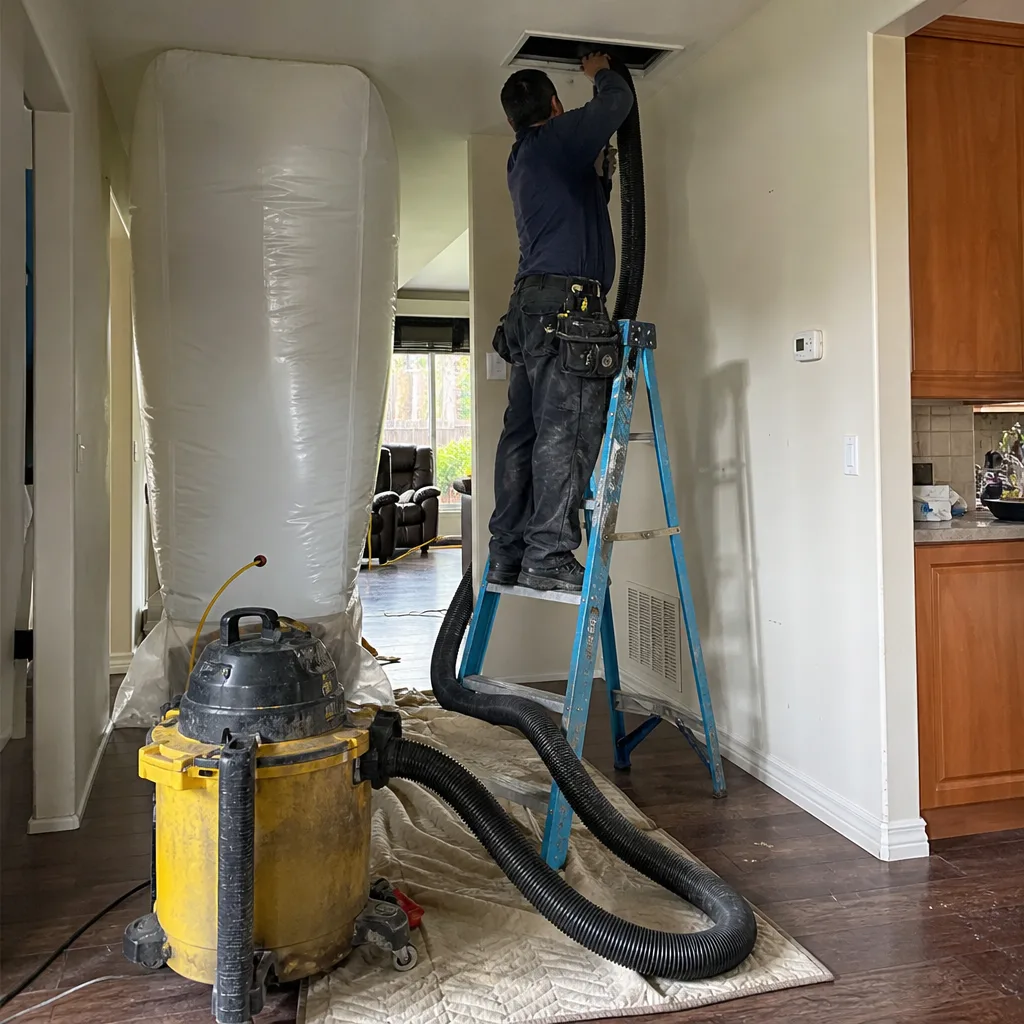
Last updated November 16, 2026
 Whole-home duct cleaning
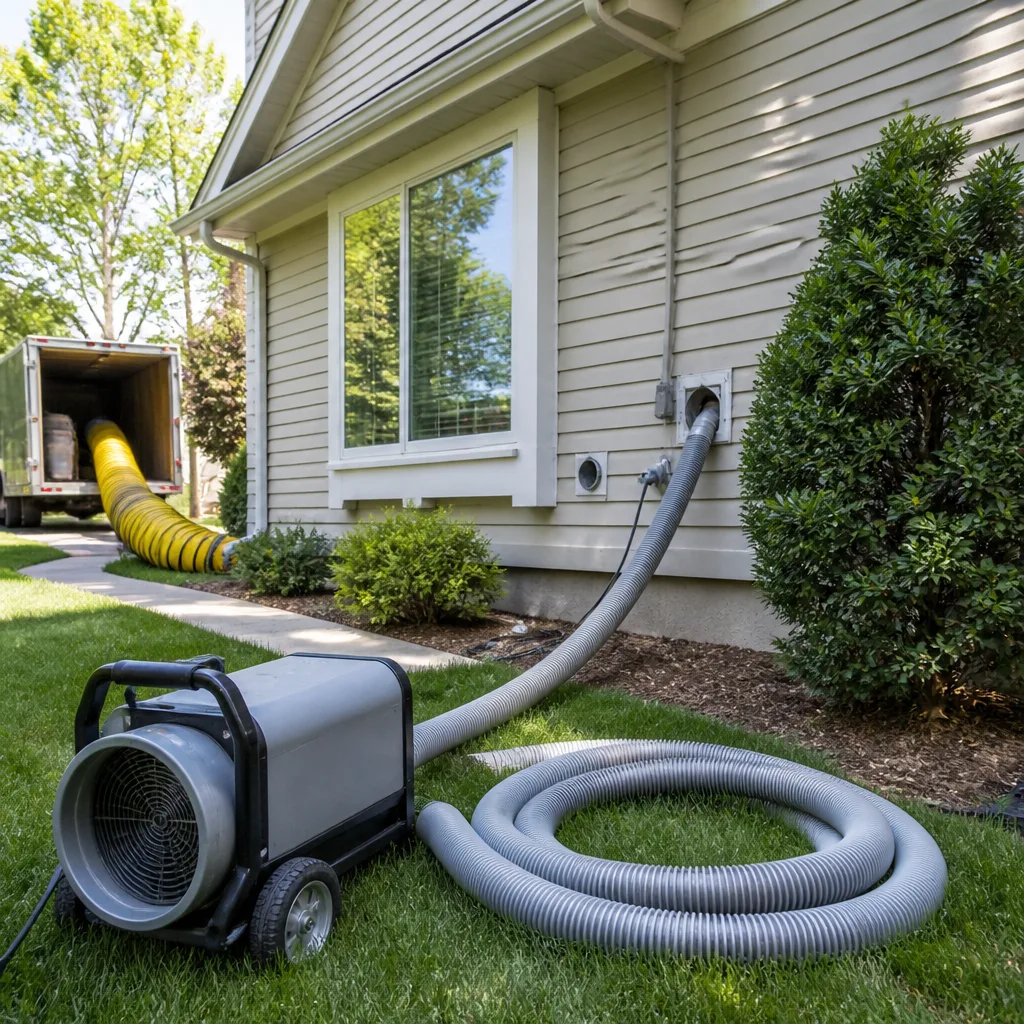
 Dryer vent cleaning
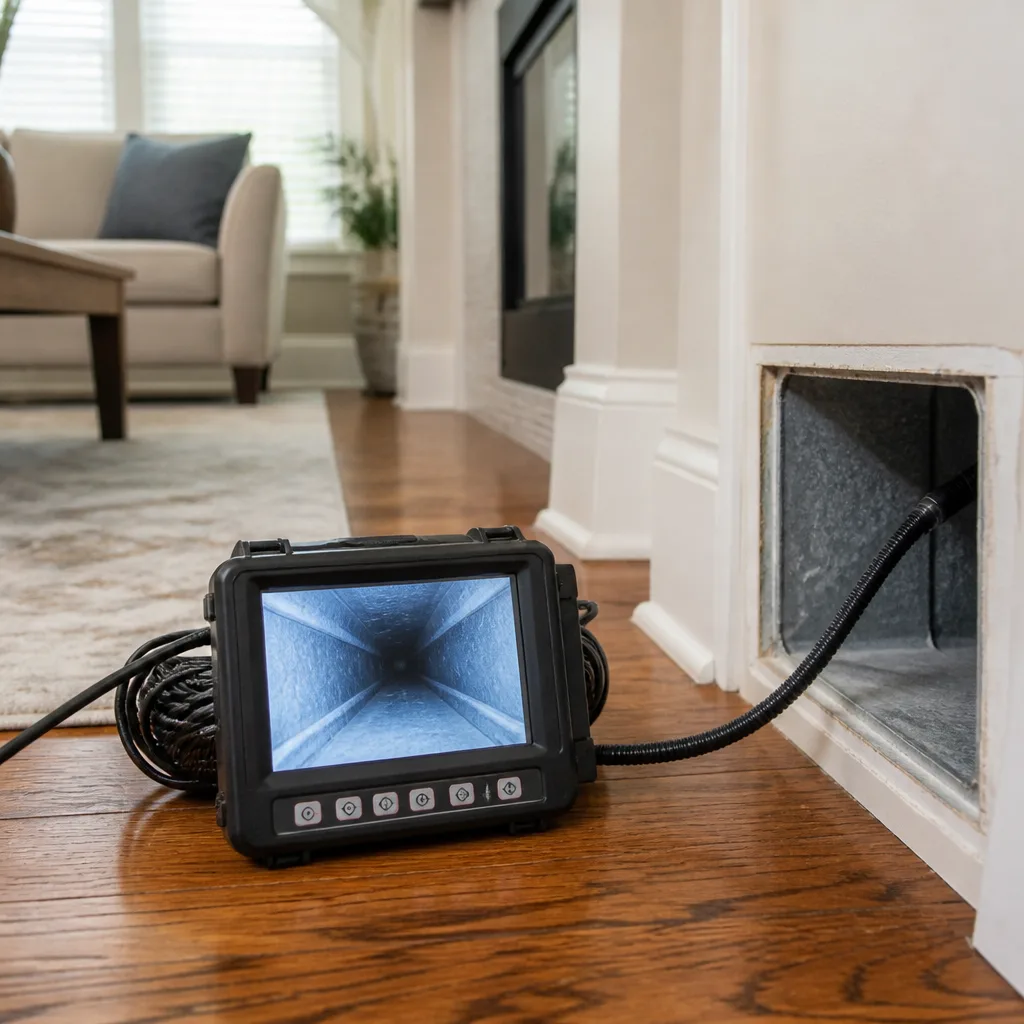 Camera inspection
 Sanitizing & deodorizing
Whole-system duct and dryer vent check with before-and-after photos - you see exactly what came out of your vents
That "$99 whole-house special" is a bait ad - the real number appears once they are in your hallway, or the "clean" is a shop-vac at the register. We photograph the inside of your ducts before and after instead.
Air Duct Cleaning Maintenance Schedule: What to Do and When
Most duct companies hand you the same number: clean every three to five years. That figure traces back to a 1993 EPA study conducted long before wildfire smoke became an annual air quality event in Northern California. It was never built for a household that spends part of every summer with the windows sealed against AQI 150 air. A real maintenance schedule isn’t a calendar with a fixed interval. It’s a set of triggers tied to occupancy, pets, construction dust, and smoke events, checked against what’s actually inside your ducts. This guide lays out those triggers, what to inspect after a smoke event, how to know when your dryer vent is due, and what you can do between professional visits to stretch the interval.
Quick Answer
There’s no single correct interval for air duct cleaning. A two-person household with no pets and no recent remodeling can often go several years between cleanings, while a home with shedding pets, ongoing renovation, or a habit of running the HVAC during wildfire smoke season may need attention far sooner. The reliable method is to schedule by trigger event (remodel, rodent activity, smoke season, a new pet or infant) and by a visual check of the supply registers, not by watching the calendar. Dryer vents run on a separate schedule driven by duct length and bend count, and the only way to set it correctly is to have the run inspected.
Styles & brands we work with
- Whole-home duct cleaning
- Dryer vent cleaning
- Camera inspection
- Sanitizing & deodorizing
Table of Contents
- Why a Fixed Three-to-Five-Year Rule Misses the Point
- The Trigger-Based Decision Tree
- Wildfire Smoke: What to Inspect and When
- Dryer Vent Maintenance: The Interval That Actually Matters
- What You Can Do Yourself Between Professional Cleanings
- Documenting Cleaning Dates and Findings
- Building a Schedule for Your Specific Home
Why a Fixed Three-to-Five-Year Rule Misses the Point
The three-to-five-year number gets repeated because it’s easy to repeat. It was never a universal standard, and it wasn’t designed with the modern California smoke calendar in mind. Dust accumulation in a duct system depends on how much particulate enters the return air, how often the system runs, and how well the filter captures what’s floating around. Two houses on the same street can have wildly different fouling rates for reasons that have nothing to do with how long it’s been since the last cleaning.
Here’s what actually drives fouling:
- Occupancy and activity level. Four people and a busy kitchen load a system faster than one retiree who travels half the year.
- Pets. A double-coated dog sheds a continuous supply of fine hair and dander that reaches the return grilles and settles in the trunk line.
- Construction and remodeling. Drywall dust, sawdust, and insulation fibers from even a modest bathroom remodel circulate through the system for weeks after the crew leaves.
- Smoke events. During a smoke season, the HVAC pulls outside air through a filter that’s rated for dust, not wildfire particulate. Whatever gets past the filter lands in the ducts.
- Filtration quality. A cheap fiberglass filter stops very little. A properly fitted pleated filter at the right MERV rating changes the whole equation.
- Duct condition. Loose joints, disconnected sections, and gaps at the plenum let dust and outside air in continuously, so a system that’s “clean” is fouling from day one.
In our experience around Chico, the homes that genuinely need cleaning most often are the ones that recently remodeled, run the system hard through a smoke season, or keep more than one shedding animal. The homes that call on a five-year clock with no other trigger usually turn out to need less than they expected, and we tell them so. That’s the honest version of the answer.
The Trigger-Based Decision Tree
Instead of asking “has it been five years,” ask “has one of these things happened?” Each trigger below is a reason to book an inspection, even if the last cleaning was recent.
- Post-remodel. After any work that generates dust (drywall, flooring, cabinetry, insulation), inspect and clean. Drywall dust is fine and it coats every surface it reaches.
- Post-rodent activity. If you’ve heard scratching, found droppings, or spotted chewed insulation, book a cleaning and an inspection. Rodents leave waste and debris in duct runs and sometimes compromise the duct itself. A repair may be part of the job.
- Post-smoke-season. After a heavy wildfire smoke event, inspect the return side and the filter, and book a cleaning if you can see soot or smell smoke when the system runs. Details in the next section.
- New pet. A new dog or cat means a step change in particulate load. Inspect within a few months, then reassess.
- New infant. Many families want a clean baseline before a baby arrives, especially in a home with older carpet and a system that hasn’t been touched in years.
- Visible discharge or musty odor. If supply registers show dark streaking or you notice a musty smell when the fan runs, the ducts need attention regardless of the calendar.
- Recent move-in. You don’t know what the previous owners did. A cleaning and inspection gives you a documented starting point.
If none of those triggers apply and your registers look clean, there’s no urgency. We’d rather tell you to wait than sell you a cleaning you don’t need. When you do book, air duct cleaning includes an inspection of the system, so you get an honest read on condition rather than a guess.
Wildfire Smoke: What to Inspect and When
Wildfire smoke is now a seasonal feature in the Northern California valley, and it changes the duct-cleaning question. During a heavy smoke event, the HVAC system keeps pulling outside air through a filter that wasn’t designed for fine particulate. Whatever gets past the filter ends up coating the inside of the return ducts first, then the supply runs.
What to inspect after a significant smoke event:
- The filter. Pull it and look at it. A filter that was clean before the event and dark after it did its job, but it’s spent. Replace it. For smoke season, a pleated filter in the MERV 11 to MERV 13 range captures fine smoke particulate far better than the basic fiberglass type, provided your system can handle the added pressure drop. Check with your HVAC technician if you’re not sure.
- The return grilles and the plenum. Look for soot film or gray-black streaking. If the return side is coated, the ducts need cleaning.
- Duct infiltration points. Gaps at joints, disconnected runs, and poorly sealed boots let unfiltered smoke-laden air into the system. These are the weak links. An inspection should include them.
- Odor. If the house smells like smoke when the fan runs after the outside air has cleared, particulate has settled in the ductwork.
Our approach after a smoke event: we run contractor-grade equipment from Nikro and Rotobrush to dislodge and capture what’s accumulated, and we use Abatement Technologies air-filtration equipment to capture the dislodged particulate rather than recirculating it into the living space. That containment standard is borrowed from remediation work. It’s the reason the job doesn’t just move dust from the ducts into the air you’re breathing.
Dryer Vent Maintenance: The Interval That Actually Matters
The annual dryer vent cleaning rule is a safe default, but it isn’t tied to how your specific vent actually accumulates lint. Lint builds up at a rate driven by three things: the length of the run, the number of bends, and how heavily the dryer is used. A short, straight vent behind the dryer in a small household can go longer than a year between cleanings. A long run with multiple 90-degree elbows, or a run that vents up through the roof, will collect lint much faster because lint settles at every turn and every low point.
How to set your own interval:
- Count the bends. Every 90-degree elbow is a lint trap. More than two elbows in a run is a reason to clean more often.
- Measure the run. Longer runs with fewer bends can still clog if the run is long enough. If you can’t see the far end, it’s time to clean.
- Watch the dry time. If a load that used to finish in 45 minutes now takes 70, the vent is restricted. That’s a sign, not a coincidence.
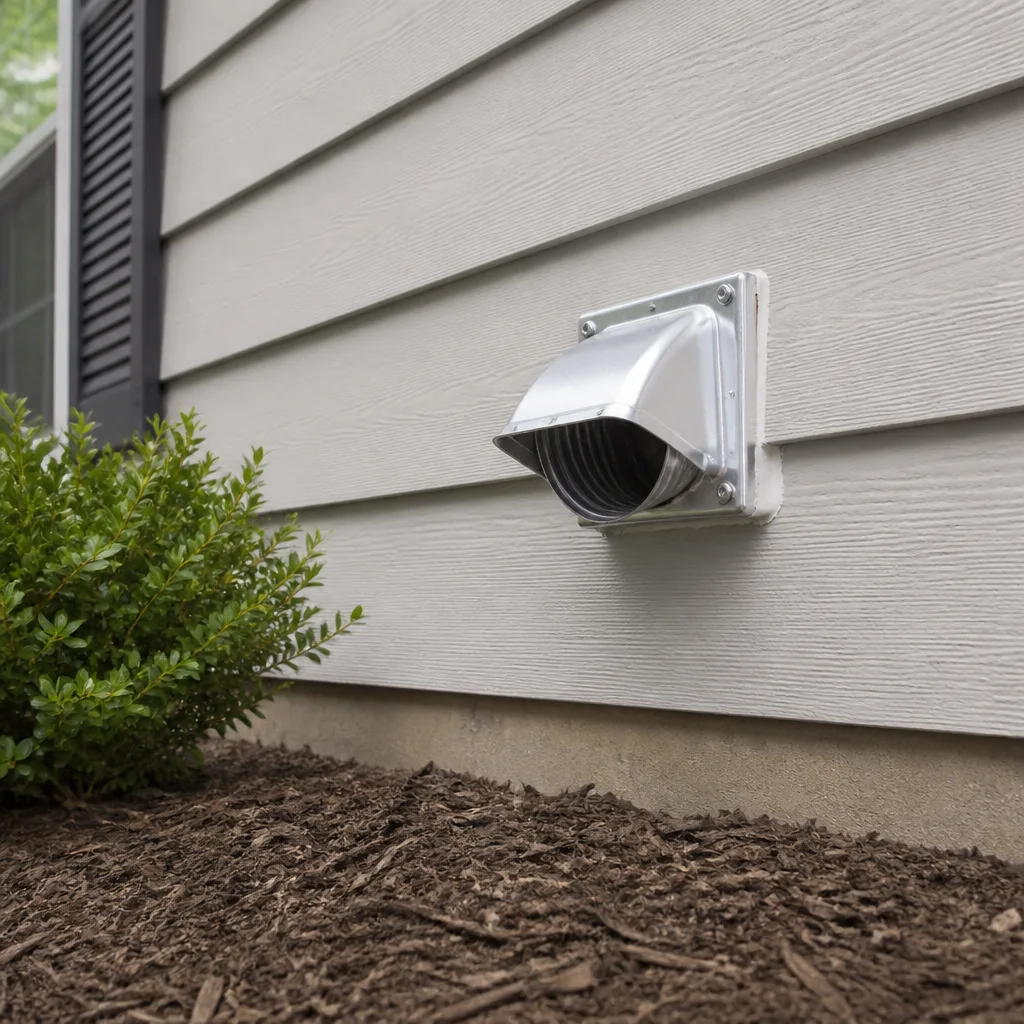
- Check the exterior hood. A flapper that doesn’t open fully, or lint visible around the outside hood, means the run needs cleaning.
- Rodent or bird activity. Nests in the exterior termination are a common problem and a serious fire risk. If you see evidence, clean and inspect the full run.
Dryer vent lint is a leading cause of residential fires, and that’s the reason we treat it as a safety service rather than a convenience. When we perform dryer vent cleaning, we clean the full run and inspect the termination, because a partial cleaning that misses the far end leaves the hazard in place. If a run is degraded or disconnected, that’s a repair issue, and we handle it on the same visit rather than scheduling a second contractor.
What You Can Do Yourself Between Professional Cleanings
You can extend the interval between professional cleanings with a few simple habits. None of these replace a proper cleaning, but they slow fouling and give you early warning when it’s time to book.
- Replace the filter on a schedule, not on memory. Write the date on the filter edge with a marker. Change it on a fixed cadence (every two to three months for a standard pleated filter, more often during smoke season or with shedding pets). A clogged filter is the single fastest way to foul a system.
- Vacuum the return grilles. A quick pass with a brush attachment on each return grille pulls surface dust before it migrates into the duct. Do this every few weeks.
- Check the supply registers visually. Look for dark streaks, dust trails, or visible debris. A clean register that suddenly streaks means something changed upstream.
- Keep the return path clear. Furniture pushed against a return grille chokes airflow and concentrates dust in that section of the system.
- Track your filter purchases. If you find yourself buying filters more often than you used to, the system may be pulling more particulate, which is a reason to inspect.
- Note the smoke season. If you run the HVAC through a heavy smoke event, plan a filter change and a visual check afterward. That single habit makes a real difference in how fast the ducts re-foul.
These habits won’t replace the deep clean, but they give you a reason to inspect, and inspection is what drives an honest schedule. The homeowner who checks the filter and the registers is the one who books a cleaning when it’s actually needed, not on a generic clock.
Documenting Cleaning Dates and Findings
Write it down. The date of the last cleaning, what was found, what was repaired, and what was replaced. That record does three things: it gives the next technician a baseline, it tells you when to expect the next trigger, and it adds real value if you sell the house.
What to capture:
- Date and scope of the cleaning. What was cleaned, how many runs, and whether the dryer vent was included.
- Filter type and MERV rating. The next technician needs to know what filter was in place so they can match it and so a future cleaning can be scheduled with the right filtration in mind.
- Findings and repairs. Loose joints, disconnected runs, rodent evidence, degraded duct sections. If we repaired something on the visit, note where and what was done.
- Before-and-after photos. We photograph the ducts before and after each cleaning. Those photos are the proof the work was actually done, and they’re a useful record to keep with the home’s maintenance file.
At resale, a documented maintenance history answers the buyer’s question about the duct system without guesswork. A buyer looking at a home with a clean, documented maintenance file is less likely to demand a duct inspection or discount the price. The record is worth keeping.
Building a Schedule for Your Specific Home
Here’s the practical method. Start with your baseline condition, then layer triggers on top.
- Book an initial inspection. A professional cleaning includes an inspection, which gives you a documented starting condition. If you don’t know when the ducts were last cleaned, this is the only way to set a real baseline.
- Identify your triggers. List the ones that apply: pets, remodeling history, smoke exposure, occupant count, filter quality, duct condition. Each one shortens the interval.
- Set a review date. Put a note on the calendar for a visual check of the registers and filter at the interval that matches your triggers, not a fixed number.
- Watch for change. A new pet, a remodel, a heavy smoke season, or a change in dry time are all reasons to move the date up.
- Separate the dryer vent. It runs on its own schedule, driven by run length and bend count. Don’t roll it into the duct schedule by default.
Homes in Chico with mature trees and older systems tend to have more duct infiltration than newer construction, which means more outside air and dust getting in. That’s a reason to inspect, not a reason to panic. The right move is to look, document, and schedule from what you find. When you’re ready, Chico homeowners can book an inspection and get an honest read on the system.
Common Mistakes to Avoid
- Treating the three-to-five-year number as law. It ignores every variable that actually matters. If your triggers say “soon” and the calendar says “three more years,” trust the triggers.
- Skipping the dryer vent because the ducts were just cleaned. They’re separate systems with separate schedules. Lint accumulation in a long, bend-heavy run needs its own attention.
- Using a cheap fiberglass filter through smoke season. It captures very little fine particulate. A pleated filter in the MERV 11 to MERV 13 range, sized correctly for your system, is a much better call, provided your system can handle it.
- Ignoring a musty smell or visible streaking. Both are signals that the ducts need attention regardless of the calendar. Waiting makes it worse.
- Hiring a coupon-driven company with consumer-grade equipment. The low price often means a vacuum that loosens dust without capturing it, which recirculates particulate into the house. The cleaning looks done and isn’t.
- Not documenting the work. Without a written record, the next technician starts from zero, and so does the buyer at resale.
- Skipping the inspection after a rodent problem. Cleaning without inspecting for chewed ducts or disconnected runs can leave a gap in the system that keeps fouling the ducts from day one.
See the difference
 Before
 After
 Before
 After
 Before
 After
When to Call a Professional
Call when you have a trigger event, not just a calendar date. If you’ve just finished a remodel, found rodent evidence, run the system through a heavy smoke season, or noticed a musty smell or visible streaking at the registers, book an inspection. If your dryer takes noticeably longer to finish a load, or lint is visible around the exterior hood, book a dryer vent cleaning. If a cleaning reveals a loose joint, disconnected run, or degraded duct section, repair it on the same visit rather than waiting for a second contractor. Duct Cleaning Chico offers free estimates in Chico. Call (866) 942-5531 to book an inspection and get an honest read on your system. We answer 24/7. Fast dispatch from 7am to 7pm, Sunday through Friday.
Frequently Asked Questions
There’s no single interval, because fouling depends on pets, occupancy, remodeling, smoke exposure, and filter quality. A low-dust household with no pets or recent construction can often go several years, while a home with shedding pets, a recent remodel, or heavy smoke exposure may need attention within a year or two. The reliable method is to schedule by trigger event and by a visual check of the registers, not by a fixed calendar. Call (866) 942-5531 for a free estimate.
Not necessarily after every event, but you should inspect the filter and the return grilles afterward. If the filter is dark and the return side shows soot film or smell lingers when the fan runs, the ducts need cleaning. During smoke season, a properly fitted pleated filter in the MERV 11 to MERV 13 range captures fine particulate far better than a basic fiberglass filter. Call (866) 942-5531 for an inspection and a free estimate.
The interval depends on the length of the run and the number of bends, not just how long it’s been. A long run with multiple 90-degree elbows collects lint faster than a short, straight one because lint settles at every turn and low point. If a load that used to finish in 45 minutes now takes 70, or lint is visible around the exterior hood, the vent needs cleaning. Call (866) 942-5531 to book it.
The difference is capture, not dislodging. A consumer-grade vacuum can loosen dust in the ducts without capturing it, which pushes particulate back into the living space. We use contractor-grade Rotobrush and Nikro equipment, plus Abatement Technologies air-filtration equipment, to capture what’s dislodged rather than recirculating it. The work is documented with before-and-after photos. Call (866) 942-5531 for a free estimate.
You can vacuum the return grilles and the supply registers yourself, which is worth doing every few weeks to slow fouling. Cleaning the duct runs themselves is a different job. A shop vacuum can’t reach the full run, can’t create the negative pressure needed to capture dislodged particulate, and can damage flex duct. The deep clean requires professional equipment. Call (866) 942-5531 for a free estimate.
Yes. A written record of cleaning dates, filter type, findings, and repairs answers a buyer’s question about the duct system without guesswork and reduces the chance of a demand for a pre-sale inspection or a price adjustment. We photograph the ducts before and after each cleaning, and those photos are the proof the work was actually done. Call (866) 942-5531 for a free estimate.
The Bottom Line
The right cleaning schedule is built from triggers, not a calendar. Watch for remodeling, rodent activity, smoke seasons, new pets, new infants, and changes in how your dryer performs. Inspect the filter and registers regularly, document what you find, and book a cleaning when the condition says it’s time. For the duct system, professional-grade equipment matters because the goal is capture, not just dislodging. For the dryer vent, the interval depends on run length and bend count, and inspection sets it correctly. When you’re ready, call Duct Cleaning Chico at (866) 942-5531 for a free estimate. We answer 24/7, with fast dispatch from 7am to 7pm, Sunday through Friday.
Written by the team at Duct Cleaning Chico.